

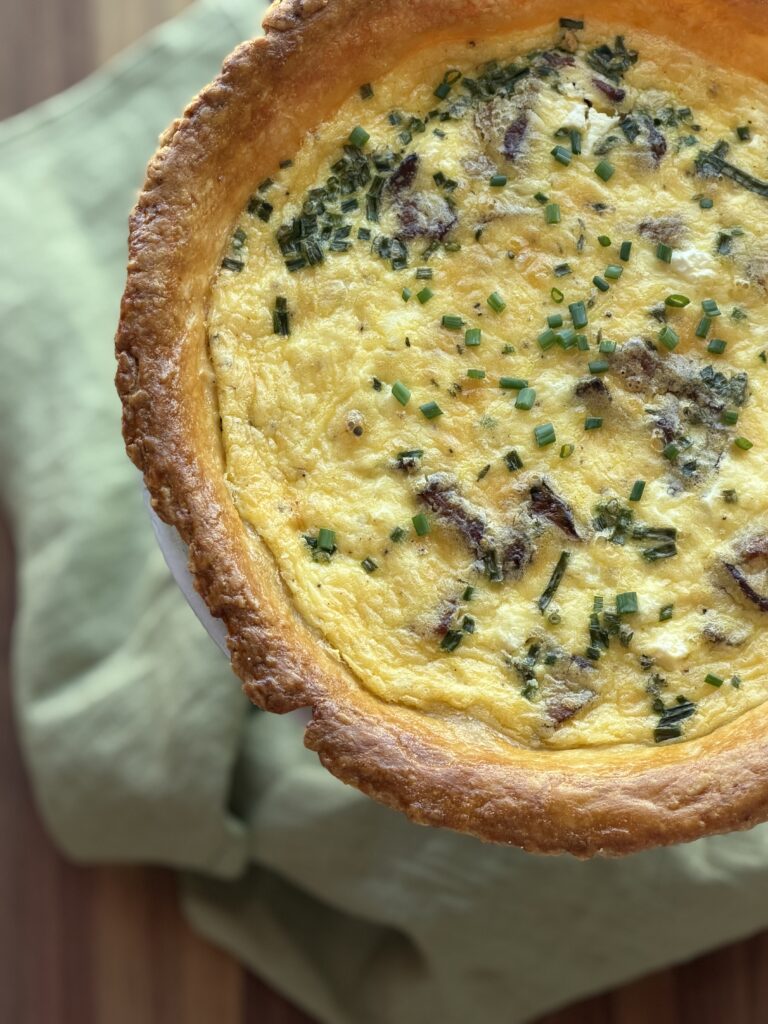
Have a little extra pie dough tucked away in the refrigerator? Sure, you could bake another pie... but why not go in a completely different direction?
Quiche is one of those wonderfully forgiving recipes that feels far more elegant than the effort it requires. Simply press your pie dough into a pie dish, whisk together a silky custard, and fill it with whatever happens to be lingering in your refrigerator. A handful of mushrooms, a few cherry tomatoes, wilted spinach, leftover roasted vegetables, or a bit of cheese—almost anything can become a beautiful quiche.
I love recipes like this because they make the most of simple ingredients. Before you know it, you've transformed a few odds and ends into a rustic French classic with a buttery, flaky crust and a rich, creamy filling. It's the kind of dish that looks impressive enough for brunch with friends, yet humble enough for a quiet weekday lunch. And if your neighbors happen to be home... don't be surprised if you find yourself carrying over a warm slice to share.
Today, my refrigerator offered up a few slices of bacon, a wedge of sheep's milk feta resting in its brine (I almost always have some on hand), and an onion patiently waiting on the counter. Together they made a salty, savory, utterly irresistible quiche that disappeared far faster than I'd care to admit. Every last buttery crumb was claimed.
One little note before we begin: I happened to be out of milk, so I made this quiche with all heavy cream. The result was an exceptionally rich, silky custard that I absolutely loved. I've included adjustments in the recipe card if you'd like to use a combination of milk and cream instead, but don't feel like you need to follow one formula exactly. Cooking is often about making the most of what you already have.
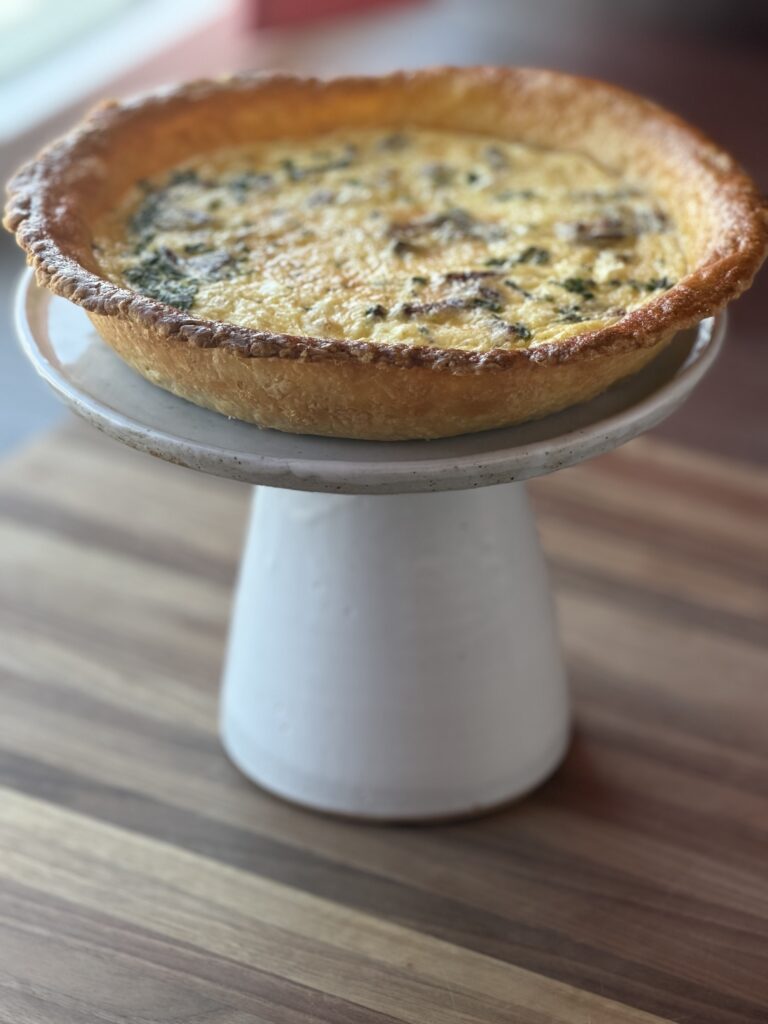
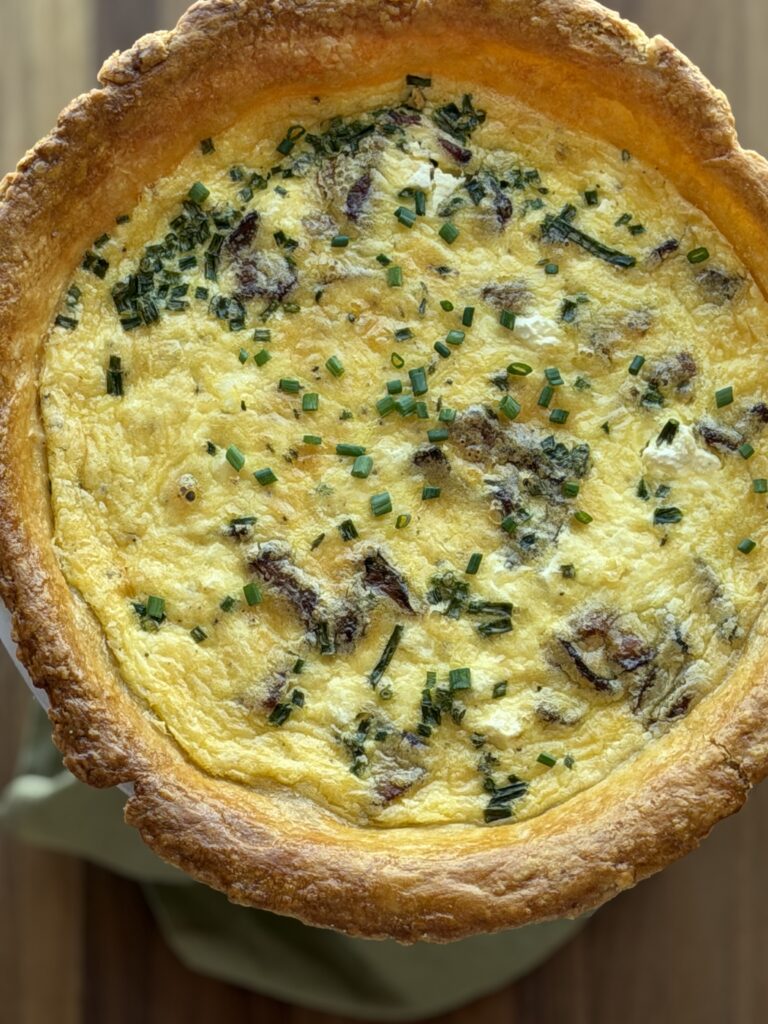
Eggs create the silky custard that gives quiche its signature texture. They provide high-quality protein, essential vitamins, and healthy fats while bringing everything together into one beautifully creamy filling.
Sheep's milk feta is one of my favorite cheeses to keep in the refrigerator. It has a wonderfully tangy, salty flavor that stands up beautifully against sweet caramelized onions. Stored in brine, it stays fresh for weeks and is just as delicious crumbled over salads as it is baked into quiche.
Cooking onions low and slow transforms them completely. Their natural sugars caramelize, creating incredible sweetness and depth that balances the salty bacon and feta.
Cream creates an exceptionally rich custard with a luxurious mouthfeel. If you prefer something a little lighter, you can substitute part of the cream with whole milk while still achieving a beautiful result.
Chives bring a delicate onion flavor and a pop of fresh green that brightens the richness of the custard without overpowering the other ingredients.
adds subtle depth and richness without making the quiche taste like mustard. It's one of those quiet ingredients that simply makes everything taste a little more complete.
One of my favorite things about quiche is that no two are ever exactly alike. Learn the simple custard ratio, open your refrigerator, and let the seasons—or whatever needs using—guide the rest.
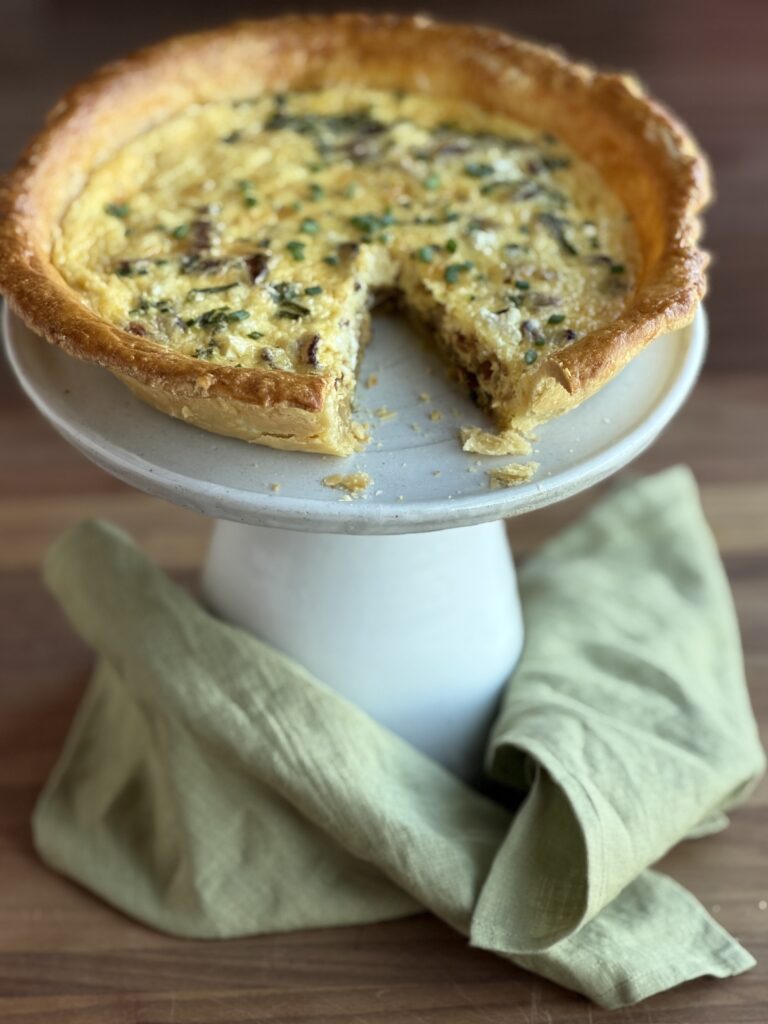
The difference between a good quiche and an unforgettable one often comes down to the custard. These simple tips will give you a creamy, luxurious filling every time.
A quick blind bake gives your pastry a head start before the custard goes in, helping the bottom stay crisp and flaky instead of becoming soft.
If you have pie weights, wonderful! If not, don't let that stop you from making quiche.
For this recipe, I simply lined my chilled pie crust with parchment paper and nested a few stainless steel measuring cups inside to weigh it down while it blind baked. They worked surprisingly well!
You can also use:
The goal isn't perfection—it's simply to give the crust a little support while it begins to bake.
One of my favorite things about cooking is finding creative solutions with what you already have. A well-loved kitchen doesn't need every specialty gadget; sometimes the measuring cups tucked away in your drawer do the job beautifully.
Whisk the eggs and cream thoroughly until no streaks of egg remain. A smooth custard bakes more evenly and creates that velvety texture we're after.
I made this quiche with all heavy cream, which gave it an incredibly rich, silky texture. You can substitute some of the cream with whole milk if you'd like a lighter result, but cream is what gives quiche its luxurious mouthfeel.
Quiche isn't meant to bake quickly. A moderate oven temperature allows the eggs to cook slowly, creating a tender custard instead of a rubbery one.
One of the biggest mistakes people make is waiting until the center is completely firm. The quiche is ready when the edges are set but the very center still has a gentle wobble. It will continue cooking from residual heat as it cools, leaving you with a perfectly silky filling.
As tempting as it is to dig in immediately, allow the quiche to rest for about 20–30 minutes. The custard finishes setting, the flavors settle, and the slices hold together much more beautifully.
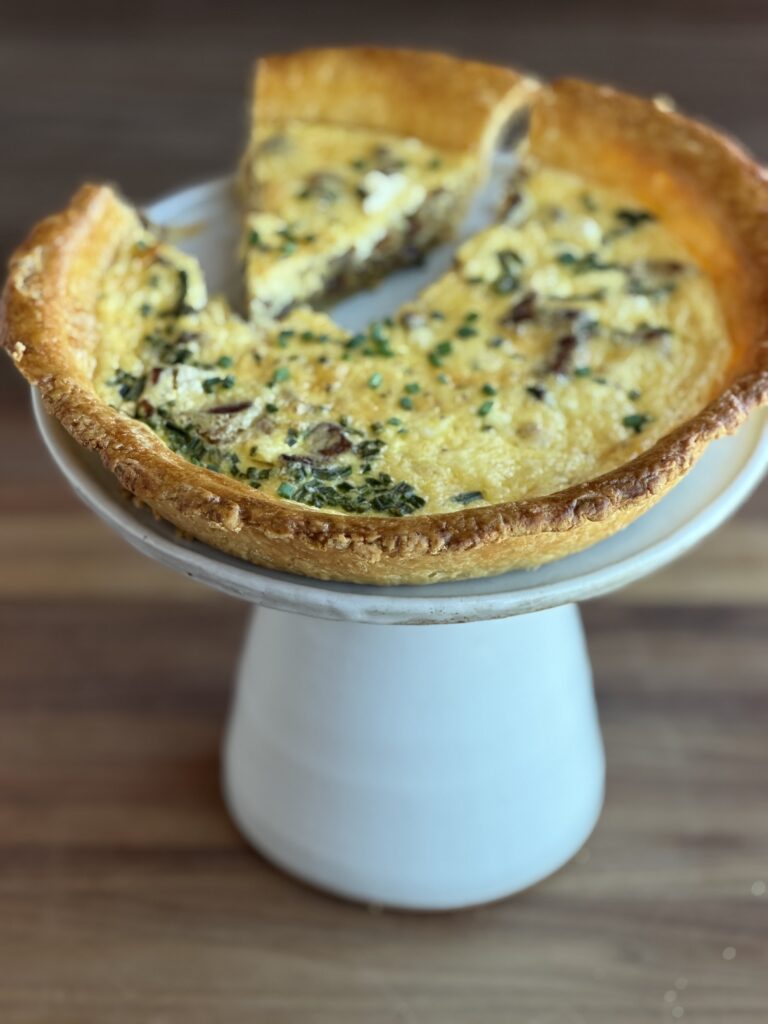
One of the biggest mistakes people make when baking quiche is waiting until the center is completely firm before taking it out of the oven.
Resist the temptation.
A perfectly baked quiche should have set edges with just a slight wobble in the very center when you gently jiggle the pan. The eggs continue to cook from the residual heat after the quiche comes out of the oven, allowing the custard to finish setting as it rests.
If you bake until the center is completely firm in the oven, the eggs will continue cooking as the quiche cools, resulting in a firmer, drier texture.
For the silkiest custard, let the quiche cool for about 20–30 minutes before serving. If you're hoping for especially clean slices—perhaps for entertaining or even photographing—allow it to cool completely before cutting. The custard will firm up beautifully while still remaining creamy and tender.
In other words, you don't need to overbake your quiche to achieve neat slices. A little patience after baking does the trick.
One of my favorite things about quiche is that once you master the custard, the possibilities are nearly endless. Here are a few of my favorite combinations:
Don't be afraid to open your refrigerator and create your own combination. Quiche is one of the most forgiving recipes you'll ever make.
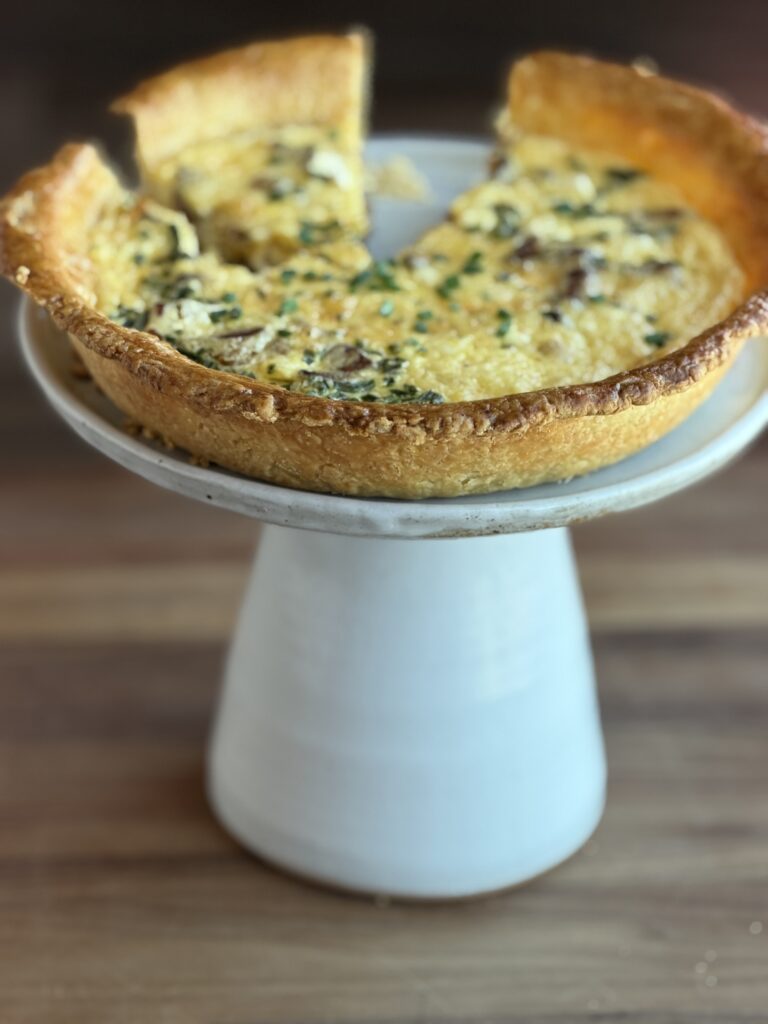
Allow the quiche to cool completely before storing.
Quiche is delicious warm, at room temperature, and even cold straight from the refrigerator.
Absolutely! Quiche is one of my favorite make-ahead dishes. Bake it the day before, refrigerate, and gently reheat before serving. Although I think a cold quiche tastes fabulous. When cold, it is a little more flavorful, and you don't have to bother with reheating!
Yes. Wrap individual slices or the whole cooled quiche tightly and freeze for up to 3 months. Thaw overnight in the refrigerator before reheating.
Overloading the filling with vegetables that contain a lot of moisture is usually the culprit. Be sure to cook mushrooms, spinach, tomatoes, or zucchini before adding them to the custard.
A quick blind bake before adding the filling helps keep the crust beautifully crisp.
The edges should be set while the very center still has a gentle wobble. It will continue cooking as it rests, giving you a silky custard instead of a dry one.
If this quiche finds its way to your brunch table—or if you put your own spin on the fillings—I would love to hear what you created. Leave a comment below and let me know what ended up in your pie crust!
This Silky Bacon & Feta Quiche is everything I love about rustic French cooking—simple ingredients transformed into something truly special. A flaky all-butter pie crust cradles a luxuriously creamy custard filled with deeply caramelized onions, smoky bacon, tangy sheep's milk feta, and fresh chives. Every bite is rich, savory, and perfectly balanced.
Roll your chilled pie dough into a 9-inch pie dish and refrigerate for at least 20–30 minutes while you prepare the filling.
Preheat the oven to 375°F (190°C).
Dock the bottom of the crust with a fork.
If using pie weights, line the crust with parchment paper and fill with pie weights.
(No pie weights? I used nested stainless steel measuring cups lined with parchment paper, and they worked beautifully!)
Blind bake for 15–18 minutes.
Remove the parchment and weights, then gently press down any air bubbles with the back of a spoon if needed.
Brush the inside of the crust with a thin layer of beaten egg and return to the oven for 2–3 minutes. This creates a barrier that helps keep the crust crisp once the custard is added.
Reduce the oven temperature to 350°F (175°C).
Meanwhile, melt the butter in a skillet over medium-low heat.
Add the sliced onion with a pinch of salt and cook slowly, stirring occasionally, for 30–40 minutes, until deeply golden, soft, and sweet.
Set aside to cool slightly.
In a large bowl, whisk together:
Whisk until completely smooth and no streaks of egg remain.
Scatter the caramelized onions evenly over the bottom of the blind-baked crust.
Top with:
Slowly pour the custard over the filling.
Give the pie dish one or two gentle taps on the counter to release any large air bubbles.
Bake at 350°F for 40–45 minutes, or until the edges are set and lightly puffed while the center still has a gentle jiggle.
The quiche will continue cooking from the residual heat after it leaves the oven.
Allow the quiche to cool for 20–30 minutes before serving.
For the cleanest slices, allow it to cool completely before cutting.
Serve warm, at room temperature, or even cold straight from the refrigerator.
Sheep's milk feta is my favorite for this recipe. Its creamy texture and tangy, salty flavor pair beautifully with the sweet caramelized onions and smoky bacon.
Don't skip the blind bake—it helps create a crisp, flaky crust. The Dijon mustard and pinch of nutmeg are subtle, but they quietly add depth and warmth to the custard.
Quiche is wonderfully adaptable. Try mushrooms, spinach, asparagus, roasted peppers, cherry tomatoes, or different cheeses depending on the season.


