

Ancient Wisdom in a Jar
Some recipes are less about following measurements and more about carrying on traditions that have nourished people for centuries.
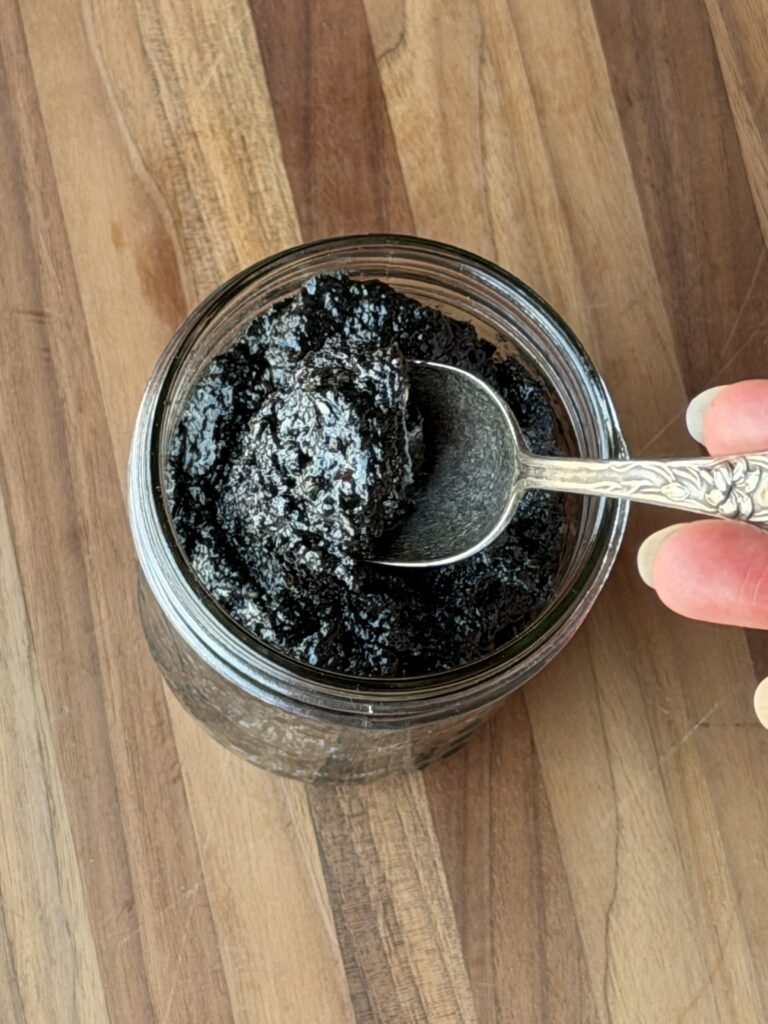
This glossy black sesame honey paste is one of those recipes.
Made with just toasted black sesame seeds and raw honey, it transforms two humble pantry ingredients into something deeply rich, earthy, and almost caramel-like. Spread it over warm sourdough, swirl it into yogurt, drizzle it over roasted sweet potatoes, or simply enjoy a spoonful with a cup of tea.
Across much of East Asia, black sesame has long been treasured as a symbol of longevity and vitality. In Traditional Chinese Medicine, these tiny ebony seeds are believed to nourish the blood, support the kidneys and liver, and encourage healthy, dark hair throughout life. Whether viewed through the lens of ancient tradition or modern nutrition, it’s easy to appreciate why black sesame has remained a beloved ingredient for thousands of years.
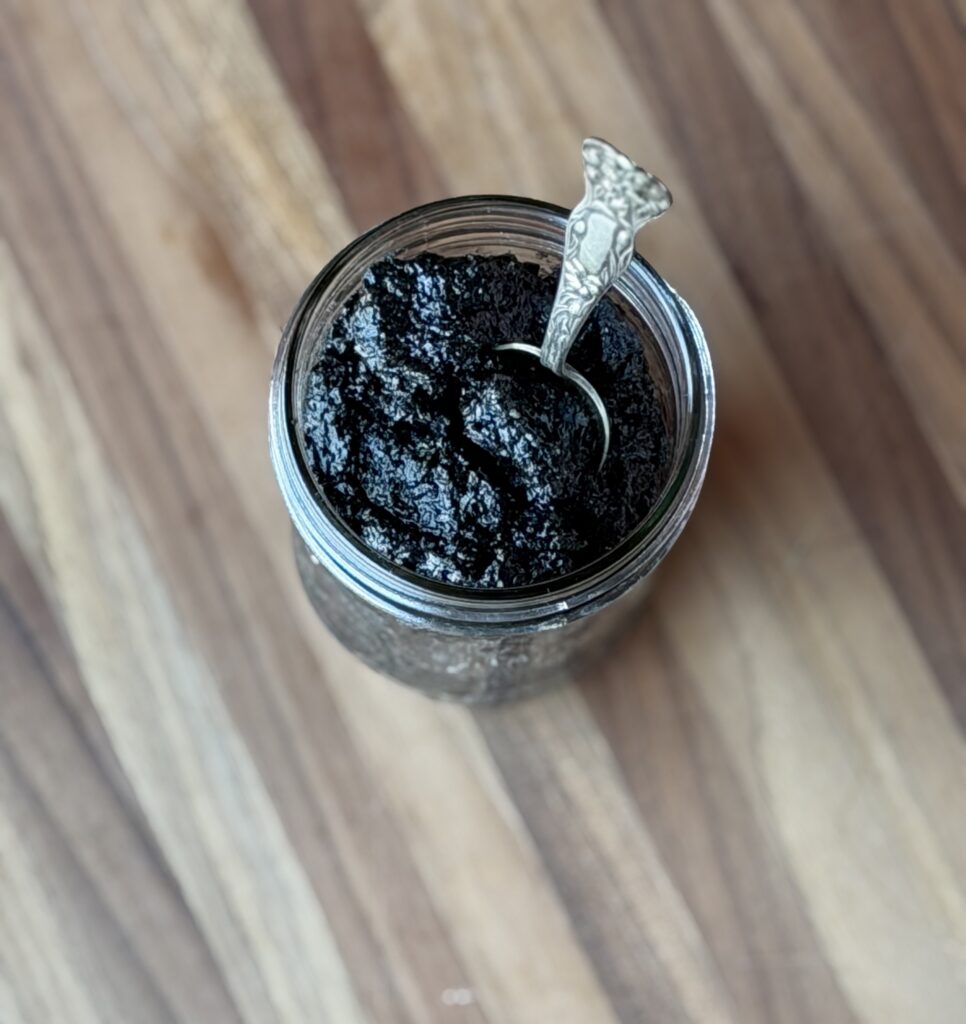
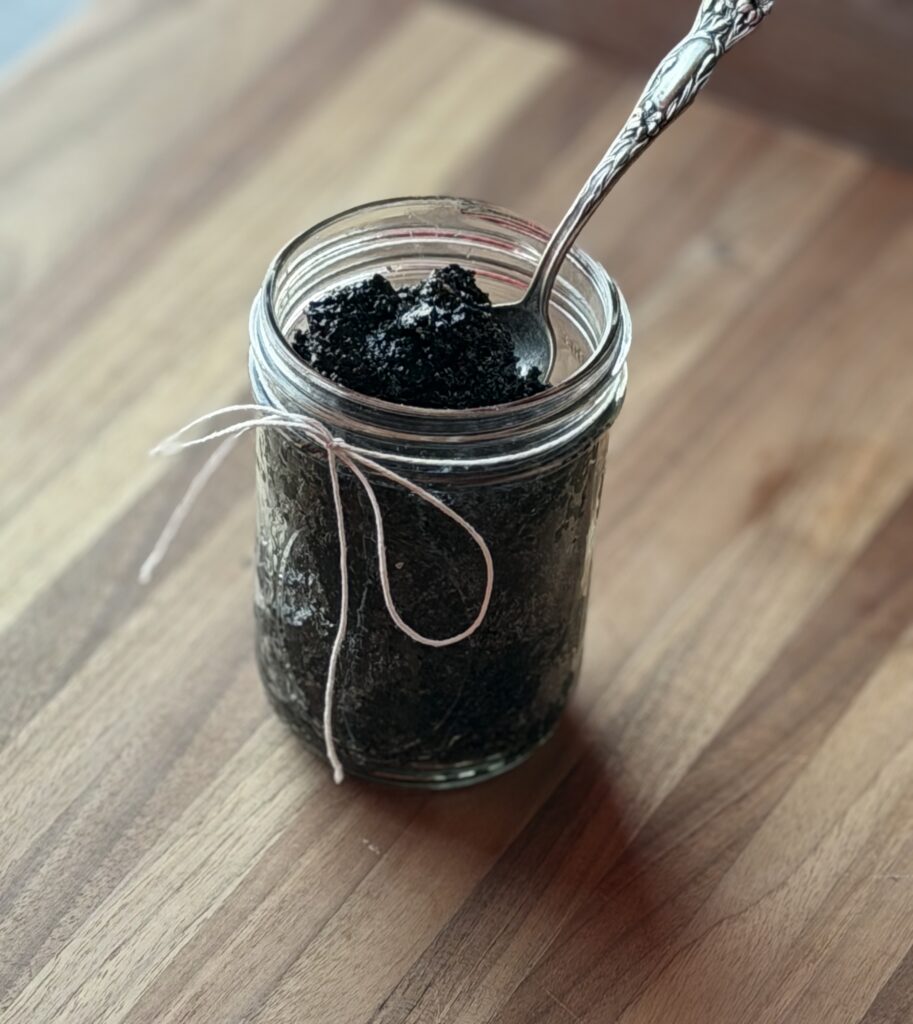
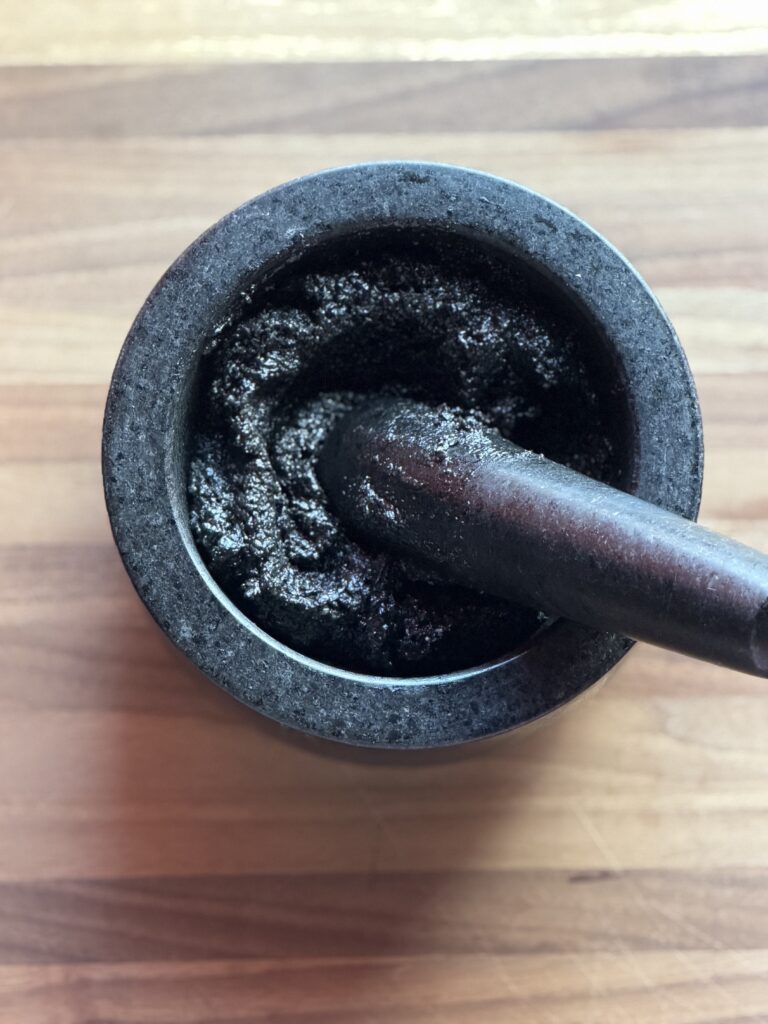
Just look at that color. Black and volcanic as the mortar and pestle it was finished in, the stunning color is as captivating and complex as it’s flavor. This is a recipe so simple, so nourishing and unique and delicious you simply can’t skip it.
What Does Black Sesame Honey Paste Taste Like?
It’s surprisingly difficult to describe because it doesn’t taste quite like anything else.
Freshly toasted black sesame seeds have an incredible depth that unfolds as you eat them. The first taste is warm and deeply nutty, followed by rich roasted notes that almost resemble freshly brewed coffee or dark cocoa. As the honey melts into the sesame, subtle caramel-like sweetness begins to emerge, balancing the earthy complexity without overpowering it.
The flavor is bold yet comforting—somewhere between toasted hazelnuts, tahini, and the rich aroma of a coffee roastery, but with a character entirely its own.
The texture is equally captivating.
Unlike a pourable nut butter, this paste is thick, dense, and almost fudge-like. It slowly softens as you chew, releasing more of its toasted aroma with every bite. Each mouthful becomes richer than the last, revealing layer after layer of flavor that lingers pleasantly on the palate.
It is one of those rare foods that makes you pause after the first bite—not because it’s overly sweet, but because it’s unlike anything you’ve tasted before.
The Beauty of Black Foods
Black rice.
Black beans.
Wood ear mushrooms.
Black fungus.
Seaweed.
While Western nutrition often groups foods by vitamins and minerals, Traditional Chinese Medicine has long organized foods by the energetic systems they are believed to support.
Within this tradition, black foods are associated with the Water element and are thought to nourish the Kidney system—a concept that extends beyond the physical kidneys themselves. The Kidney system is considered the body’s deepest reserve of vitality, influencing growth, aging, reproduction, bones, hearing, and the health of the hair.
According to Traditional Chinese Medicine, foods that gently replenish this system may help support resilience, particularly during periods of stress, aging, or recovery.
Whether you embrace these traditions or simply appreciate them as part of centuries-old culinary wisdom, there’s something undeniably comforting about preparing foods that have been cherished across generations.
I know I enjoy so much the ritual of having a sweet nutty spoonful everyday, savoring the taste and feeling it nourishing my body.
Black Sesame Through the Lens of Traditional Chinese Medicine
For thousands of years, black sesame seeds have been used in Traditional Chinese Medicine as a nourishing food rather than a medicine.
Traditionally, they are believed to:
- Nourish the Liver and Kidney systems
- Support healthy blood
- Promote healthy hair
- Lubricate the intestines
- Support graceful aging
- Help replenish the body after illness or childbirth
These traditional uses come from centuries of observation and cultural practice rather than modern clinical evidence, but they continue to influence the way many people enjoy black sesame today.
What Modern Nutrition Says
While research doesn’t confirm every traditional claim, black sesame seeds are undeniably nutrient-dense.
They provide:
- Healthy unsaturated fats
- Plant protein
- Calcium
- Magnesium
- Iron
- Copper
- Zinc
- Vitamin E
- Fiber
- Powerful antioxidant compounds called lignans, including sesamin and sesamolin
Many of these nutrients contribute to normal bone health, healthy blood cells, skin health, and protection against oxidative stress.
The deep black color also comes from natural plant pigments that contribute additional antioxidant activity.
Black Sesame Seeds
Tiny but incredibly flavorful, black sesame seeds develop an almost coffee-like richness once toasted. Their oils become fragrant and buttery, making them ideal for grinding into a smooth paste.
Raw Honey
Good honey adds more than sweetness.
It binds the ground sesame into a silky spread while contributing floral notes that soften the naturally earthy flavor. Local raw honey makes this recipe especially beautiful, allowing the character of the flowers to shine through.
Though simple, this is a special recipe and a special paste – make sure you splurge on a good, raw honey that is still soft and flows nicely.
I bought a gorgeous fresh jar of high altitude honey (meaning it was harvested higher up in the mountains here in Utah). The flavor and texture is extraordinary and perfect for this black sesame honey paste.
Releasing the Natural Oils
The magic of this recipe happens when the toasted black sesame seeds begin releasing their natural oils.
At first, the seeds will resemble coarse crumbs, but with patience they’ll slowly transform into a rich, glossy paste. Exactly how this process looks will depend on the equipment you’re using.
If you have a food processor, continue processing the toasted sesame seeds until they naturally release their oils and form a thick paste before blending in the honey.
I made my batch in a Vitamix, and the process was a little different. Because the mixture is so thick and low in moisture, I found that adding the honey earlier helped everything begin to come together. Even then, the paste was incredibly dense and my Vitamix eventually overheated while trying to blend it completely smooth.
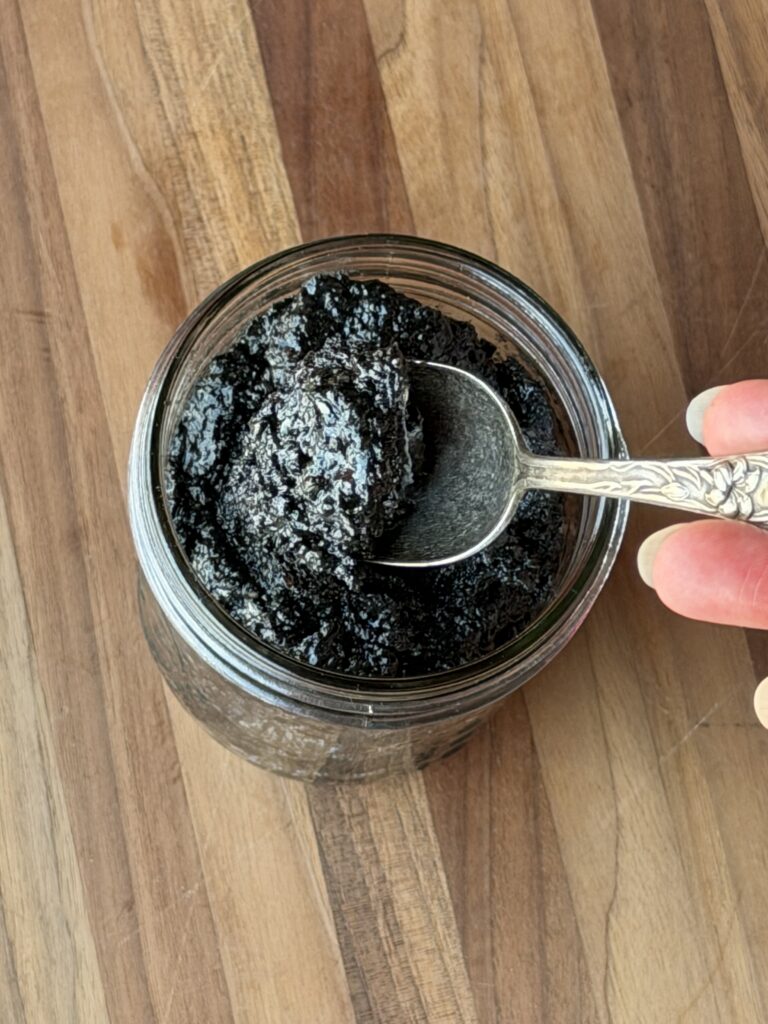
Rather than forcing it, I transferred the mixture to my mortar and pestle, where I gently worked it by hand until it became beautifully cohesive. While it never reached the consistency of a pourable nut butter, it developed into a wonderfully rich, thick paste with a texture reminiscent of marzipan or pistachio paste.
Don’t worry if your finished paste isn’t perfectly smooth. Depending on your equipment and the freshness of your sesame seeds, your texture may range from silky to pleasantly rustic. The goal isn’t a spreadable butter—it’s a deeply roasted, intensely flavorful black sesame paste that can be enjoyed on its own or transformed into desserts, breakfasts, and baked goods.
Food Processor vs. Vitamix
Black sesame seeds contain plenty of natural oil, but releasing those oils takes a little patience—and the process looks different depending on the equipment you’re using.
If you’re using a food processor, continue blending the toasted sesame seeds until they gradually transform from coarse crumbs into a thick paste. Once the oils have been released, blend in the honey until smooth.
If you’re using a high-powered blender such as a Vitamix, you may find that adding the honey much earlier helps the mixture circulate. The honey provides just enough moisture to keep the blades moving and prevents the sesame from becoming trapped above them. Use the tamper continuously and blend in short intervals if the motor begins to work hard.
Depending on your sesame seeds and your equipment, your finished paste may be silky smooth or pleasantly rustic. Both are equally delicious. The goal isn’t a perfectly pourable butter, but a rich, concentrated paste with an intensely roasted flavor.
Ways to Enjoy Black Sesame Honey Paste
- Spread on toasted sourdough
- Swirled into Greek yogurt
- Over warm oatmeal
- Drizzled over roasted sweet potatoes
- Folded into overnight oats
- Added to smoothies
- Served with sliced pears or apples
- Spread inside crepes
- Over vanilla ice cream
- Stirred into warm milk for a comforting, nutritious evening drink
Frequently Asked Questions
Does this taste sweet?
Yes! It is sweet but not too sweet. The toasted sesame remains the star while the honey rounds out its earthy bitterness.
Can I use white sesame seeds?
Yes, but the flavor is milder and the nutritional profile differs somewhat. Black sesame produces a deeper, richer paste. The point really is to have the stunning color, and high antioxidant profile of the black sesame seeds.
Do I need to refrigerate it?
Yes. Because of the honey and freshly ground seeds, refrigeration helps preserve freshness.
Storage
Store in a sealed glass jar in the refrigerator for up to three weeks.
If the oils separate naturally, simply stir before serving.
A Spoonful of Tradition
There is something almost magical about transforming thousands of tiny seeds into one silky, inky-black spread.
Perhaps it’s because this recipe reminds us that nourishment doesn’t have to be complicated. Sometimes it comes from honoring ingredients that have sustained generations before us, appreciating both the wisdom passed down through tradition and the discoveries of modern nutrition.
Whether you make this black sesame honey paste for its rich, toasted flavor, its versatility, or its impressive nutritional profile, or simply because it’s beautiful sitting on your kitchen counter, I hope it becomes one of those recipes you find yourself reaching for again and again and feeling nourished by every spoonful.
Black Sesame Honey Paste
This Black Sesame Honey Paste is a rich, nutty spread made with just two wholesome ingredients—toasted black sesame seeds and raw honey. Inspired by traditional East Asian flavors and the nourishing principles of Traditional Chinese Medicine, this naturally sweet paste is packed with healthy fats, minerals, and antioxidants. Smooth, earthy, and lightly sweet, it's delicious spread over warm sourdough, swirled into Greek yogurt or oatmeal, drizzled over roasted sweet potatoes, or enjoyed by the spoonful. Simple to make and beautiful to serve, this timeless recipe is an easy way to bring a little ancient culinary wisdom into your modern kitchen.
Ingredients
Instructions
-
Toast the sesame seeds in a dry skillet over medium-low heat for 5–8 minutes, stirring frequently until fragrant.
-
Allow the seeds to cool for about 10 minutes.
-
Transfer them to a food processor or high-powered blender.
-
Process for 5–10 minutes, scraping down the sides as needed, until the seeds release their oils and form a thick paste.
-
Add the honey and blend again until smooth and glossy.
-
Spoon into a clean glass jar and refrigerate.

