

The Joy of Making Things From Scratch
There is something incredibly rewarding about making small things from scratch.
Not elaborate meals or complicated baking projects, but the little things: condiments, sauces, preserves, and spreads that most people simply grab from a store shelf without a second thought. Lemon curd falls squarely into that category.
I find so much joy in the slowness of it all.
Modern life often encourages us to move faster. Everything is packaged, processed, optimized, and designed for convenience. While there is certainly a time and place for convenience, I think something important is lost when we never take the long way.
Cooking from scratch invites us to slow down. It asks us to participate in the process rather than simply consume the final product.
Whenever possible, I try to make things myself because the results are almost always better. Not only does homemade food taste infinitely more vibrant and alive, but you know exactly what went into it because you chose every ingredient yourself.
That simple act of transforming a handful of ingredients into something beautiful feels almost magical every single time.
The Color Yellow
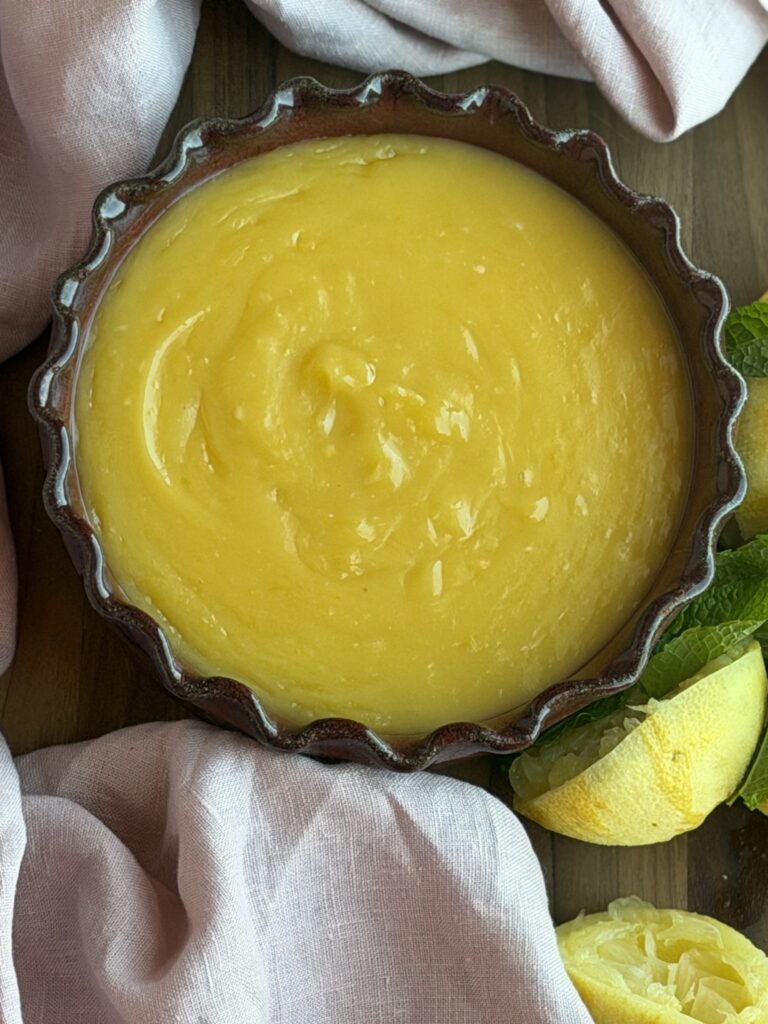
Not only is this rich, luscious, sweet-tart lemon curd absolutely delicious, but can we take a moment to appreciate this color?
Seriously. Look at it.
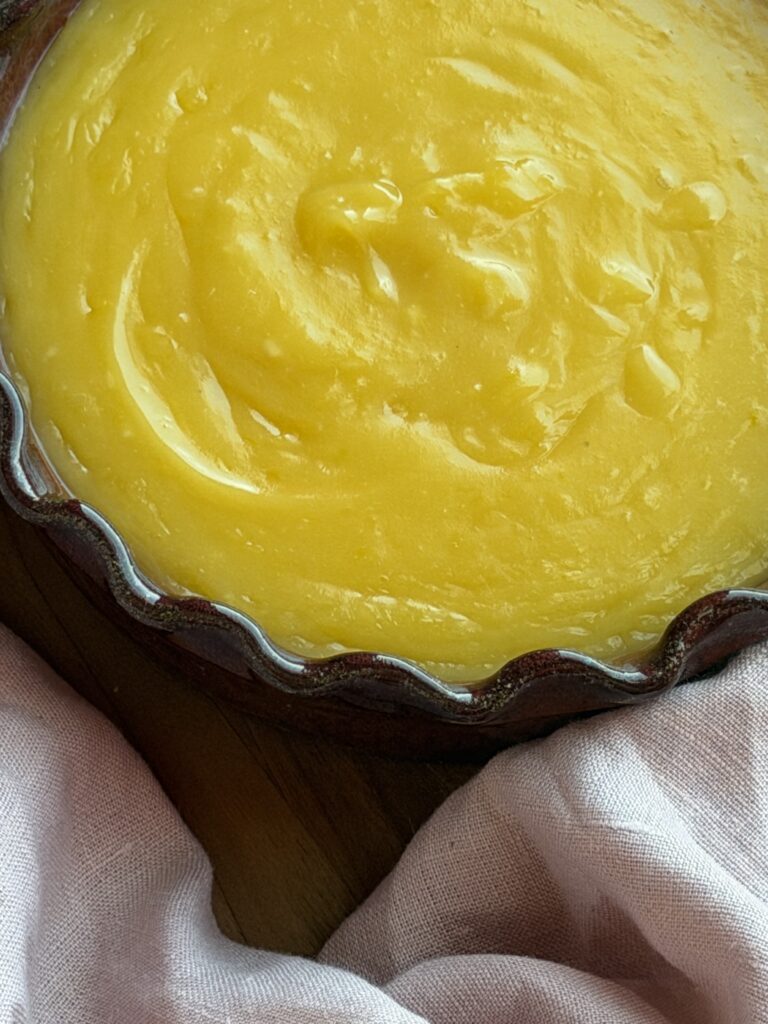
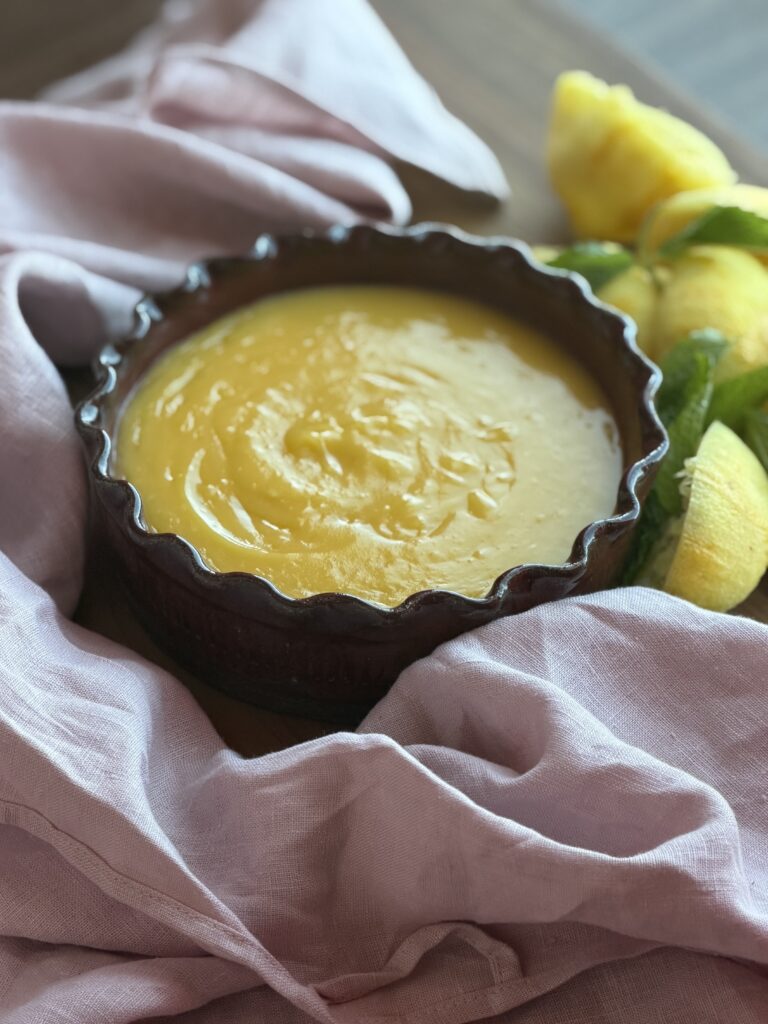
When I finished stirring the curd over gentle heat and watched it transform into a glossy bowl of liquid sunshine, I was completely captivated. The color almost doesn’t look real.
What I love most is that nothing about it is artificial.
There are no dyes, no filters, and no shortcuts. That gorgeous golden hue comes entirely from grass-fed butter, pasture-raised egg yolks, and fresh lemons working together exactly as nature intended.
The result is a bright, cheerful yellow that somehow manages to look both luxurious and playful at the same time.
Perhaps it is no surprise that yellow is often associated with happiness, warmth, optimism, and energy. Looking into a bowl of homemade lemon curd feels a little like capturing sunshine and keeping it in your refrigerator.
And fortunately, it tastes just as good as it looks.
Simple Ingredients, Extraordinary Results
One of my favorite things about lemon curd is how a handful of simple ingredients can transform into something so luxurious. There are only a few components, which means every ingredient has an important role to play.
Lemons
The star of the show.
Fresh lemons provide the bright acidity and floral citrus flavor that make lemon curd so irresistible. Both the juice and the zest are used in this recipe. The juice brings tartness while the zest contributes fragrant essential oils that create a deeper, more complex lemon flavor.
Sugar
Sugar does more than sweeten the curd.
It balances the sharp acidity of the lemons and allows their bright citrus notes to shine without becoming overwhelming. When rubbed together with fresh lemon zest, the sugar absorbs the fragrant oils from the peel, creating an intensely aromatic lemon sugar that gives the finished curd even more flavor.
Eggs
Eggs are what transform lemon curd from a simple citrus syrup into a silky, luxurious spread.
The yolks provide richness, body, and that beautiful golden color while helping the curd thicken into its signature velvety texture.
Butter
Butter is responsible for the smooth, luscious mouthfeel that makes lemon curd so special.
As it melts into the warm curd, it softens the acidity of the lemons and creates a rich, glossy finish. I prefer using high-quality grass-fed butter whenever possible, both for flavor and for its beautiful golden color.
Sea Salt
Just a small pinch makes all the difference.
Salt enhances the sweetness, brightens the citrus flavor, and helps all of the ingredients work together harmoniously.
Together, these simple ingredients create something far greater than the sum of their parts: a bright, silky lemon curd that tastes like pure sunshine.
The Secret: Oleo Saccharum
While preparing this recipe, I learned a technique from a pastry chef that immediately elevated my lemon curd.
Before adding the other ingredients, the lemon zest is rubbed directly into the sugar. At first glance it may not seem like much is happening, but this simple step makes a remarkable difference.
This technique is called oleo saccharum, a Latin phrase meaning “oil sugar.”
As the sugar is massaged into the zest, it begins to draw out the fragrant essential oils contained within the lemon peel. The sugar becomes intensely aromatic, taking on a bright citrus perfume that cannot be achieved with lemon juice alone.
The result is a deeper, more complex lemon flavor that carries throughout the finished curd.
There is something undeniably romantic about a bowl of lemon zest and sugar resting on the countertop. The bright flecks of yellow slowly perfume the kitchen while the sugar works its magic. It feels like the sort of thing you would stumble upon in a rustic countryside kitchen or a fairy tale cottage tucked away in the woods.
Sometimes the beauty of cooking comes not only from the finished dish, but from the little moments throughout the process. This is one of them.
It is a small step that takes only a minute or two, but it transforms a good lemon curd into a truly exceptional one.
Lemon Curd
This homemade lemon curd is bright, silky, rich, and bursting with fresh lemon flavor. Made with just a handful of simple ingredients, it strikes the perfect balance between sweet and tart while maintaining an irresistibly smooth texture. A simple pastry-chef technique called oleo saccharum draws fragrant citrus oils from the lemon zest, creating an intensely lemony curd that far surpasses anything you can buy at the store.
Spread it onto toast, spoon it over yogurt, dollop it onto scones, swirl it into whipped cream, or enjoy it straight from the jar. However you choose to use it, this glossy golden curd tastes like pure sunshine.
Ingredients
Instructions
Make the lemon sugar
-
Combine the lemon zest and sugar in a bowl.
-
Rub together with your fingertips for 2-3 minutes until the sugar becomes fragrant and slightly moist.
-
Let sit 30 minutes (or up to several hours).
Build the curd
-
Whisk the eggs into the lemon sugar.
-
Add lemon juice and salt.
Cook gently
-
Place over a double boiler or very low heat.
-
Stir constantly with a silicone spatula.
-
Cook until thick enough to coat the back of a spoon, about 8-12 minutes.
Finish
-
Remove from heat.
-
Whisk in butter a few cubes at a time until glossy.
-
Strain if you want a perfectly smooth curd (I personally like leaving some zest in).
5. Chill
-
Press plastic wrap directly onto the surface.
-
Refrigerate at least 2 hours.
-
The result is silky, bright, rich, and intensely lemony.
Note
- For the brightest flavor, use freshly squeezed lemon juice rather than bottled juice.I do not strain my lemon curd. The tiny pieces of zest add beautiful texture and an extra burst of lemon flavor. If you prefer an ultra-smooth curd, simply strain it through a fine mesh sieve before chilling.
- Cook the curd over gentle heat and stir continuously. High heat can cause the eggs to scramble instead of creating a silky custard.Lemon curd will continue to thicken as it cools, so don't worry if it seems slightly loose when you remove it from the heat.
- If you only have salted butter - go ahead and use it! It will taste delicious. Using salted butter gives the recipe depth and mingles with the sweetness beautifully. Just omit the pinch of salt the recipe calls for.
- Stored in an airtight container in the refrigerator, lemon curd will keep for approximately 1 to 2 weeks.

