

Literary Cravings
Am I the only one who gets an overwhelming urge to cook whatever the characters are eating while reading a beautifully descriptive book or watching a favorite movie? Whether it’s the hazelnut soup mentioned in Tangled, the impossibly succulent roast chicken from Coraline, or the lavish feasts described throughout classic literature, I’ve always found myself craving the dishes that bring fictional worlds to life.
Many of the recipes on this blog have been inspired by those moments, and this pasta puttanesca is no exception.
Those who have read A Series of Unfortunate Events or watched the film adaptation will probably remember the scene where the Baudelaire children prepare pasta puttanesca for Count Olaf and his eccentric theater troupe. It sounded so simple, so unpretentious but intriguing, that I knew I had to make it myself. One bite was all it took—I was hooked. It was everything I had hoped after hearing its desciption. Since then, it has become one of my favorite pantry meals, perfect for evenings when I want something comforting, deeply flavorful, and inexpensive without sacrificing quality. Or let’s be honest, if I am feeling too lazy to take a trip to the store.
A Small History
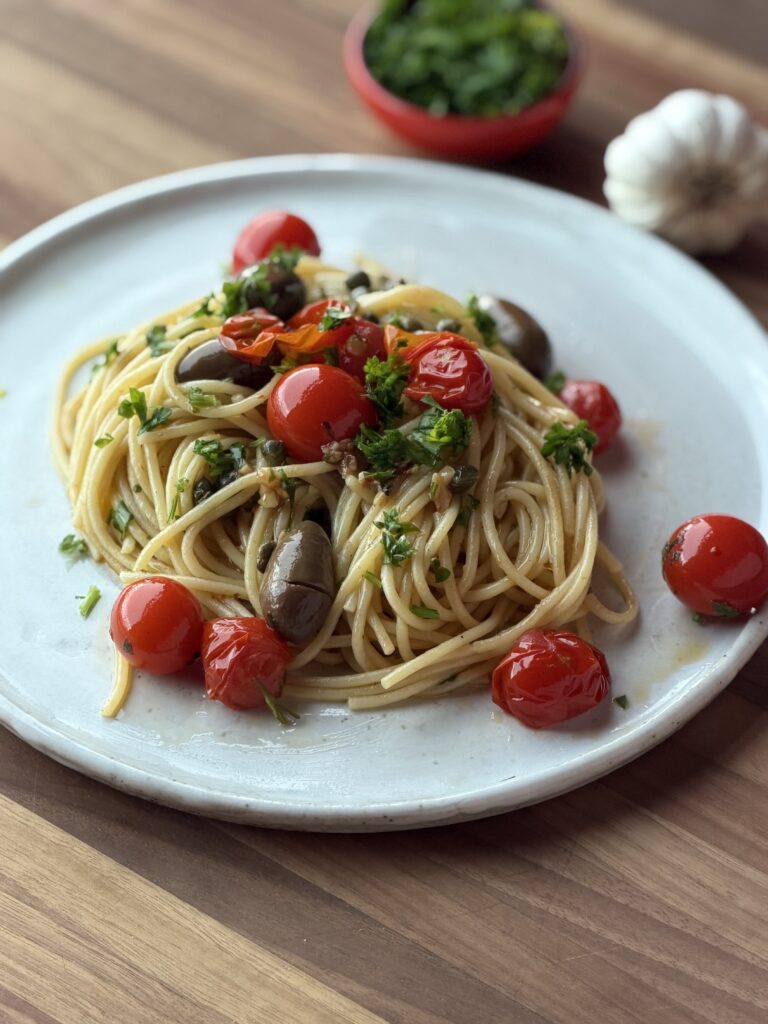
Literary inspiration aside, puttanesca is one of those wonderfully bold Italian dishes that fills the entire house with mouthwatering aromas as it cooks. Garlic perfumes generous amounts of olive oil while anchovies melt and emulsify into the sauce, followed by the sweet scent of blistering tomatoes, briny olives, and capers. It’s the kind of meal that announces itself long before it’s ready to eat.
The name puttanesca comes from the Italian word puttana, meaning “prostitute.” It is said that the dish was prepared in brothels because its irresistible aroma would drift into the streets and attract customers. Another story suggests it was born simply as a quick meal made from pantry staples thrown together at a moment’s notice. While its true origins remain debated, one thing is certain: puttanesca has earned its place as one of Italy’s most beloved pasta dishes.
Traditionally, puttanesca is made with canned tomatoes, creating a rich and deeply savory sauce. One evening, however, I reached into my refrigerator only to discover I had a pint of colorful cherry tomatoes but no canned tomatoes. What began as a simple substitution quickly became my favorite way to prepare the dish.
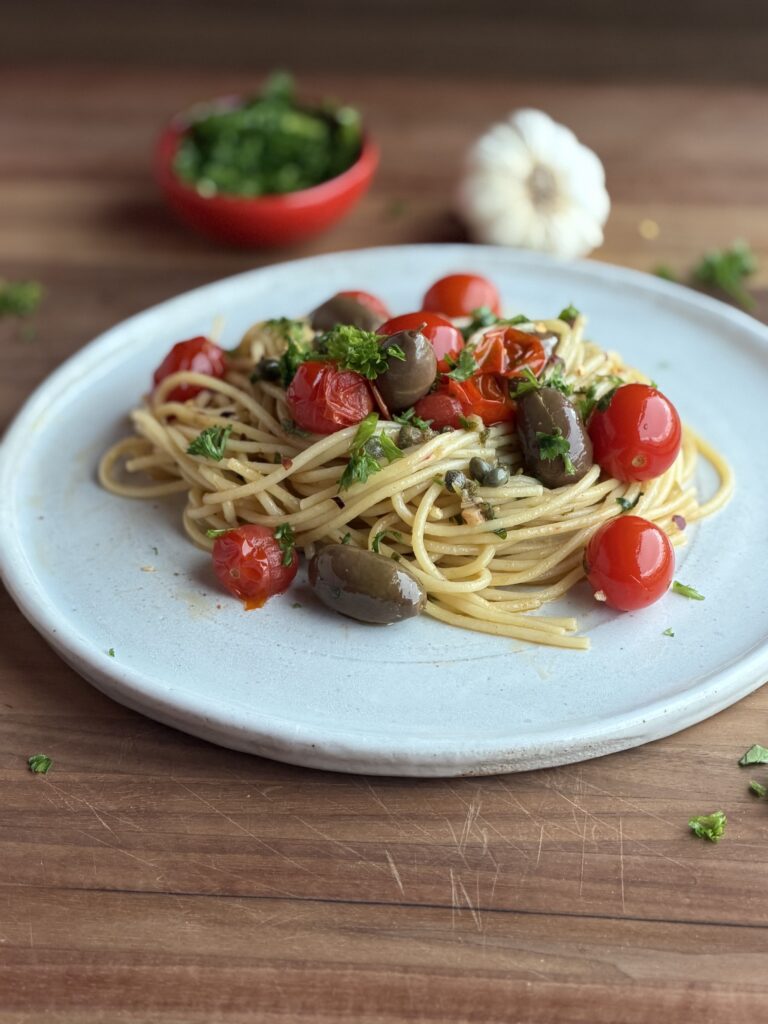
As the tomatoes blister and soften, they release their naturally sweet juices into the olive oil, creating a lighter, brighter sauce that beautifully balances the salty olives, capers, and anchovies. It also gives you a pop of sweetness that sings amoungst the otherwise salty, briny ingredients. The result of making this dish with fresh cherry tomatoes is every bit as satisfying as the traditional version while feeling wonderfully fresh, vibrant and perfect for summer.
I also happen to love anchovies, but if you’ve always been hesitant, I encourage you to give them a chance here. They don’t make the pasta taste fishy—instead, they completely dissolve into the olive oil, lending an incredible depth of savory flavor that most people would never recognize as anchovies. They’re the quiet ingredient that makes everyone wonder why the pasta tastes so unbelievably good.
Pantry Pasta
Puttanesca is the ultimate pantry pasta—a recipe built almost entirely from ingredients that quietly wait on your shelves until inspiration strikes.
Capers and olives? They’re probably tucked away in jars on the refrigerator door. Anchovies and canned tomatoes? Chances are they’re sitting patiently in the pantry. Garlic is a staple in my kitchen, and I almost always have a pint of cherry tomatoes on the counter, especially during the summer months.
One of the reasons I love this recipe so much is that it transforms a handful of humble ingredients into something that tastes remarkably elegant and impressively flavorful. With little more than good olive oil, garlic, tomatoes, olives, capers, anchovies, and pasta, you’ll have a deeply savory meal that comes together in about thirty minutes.
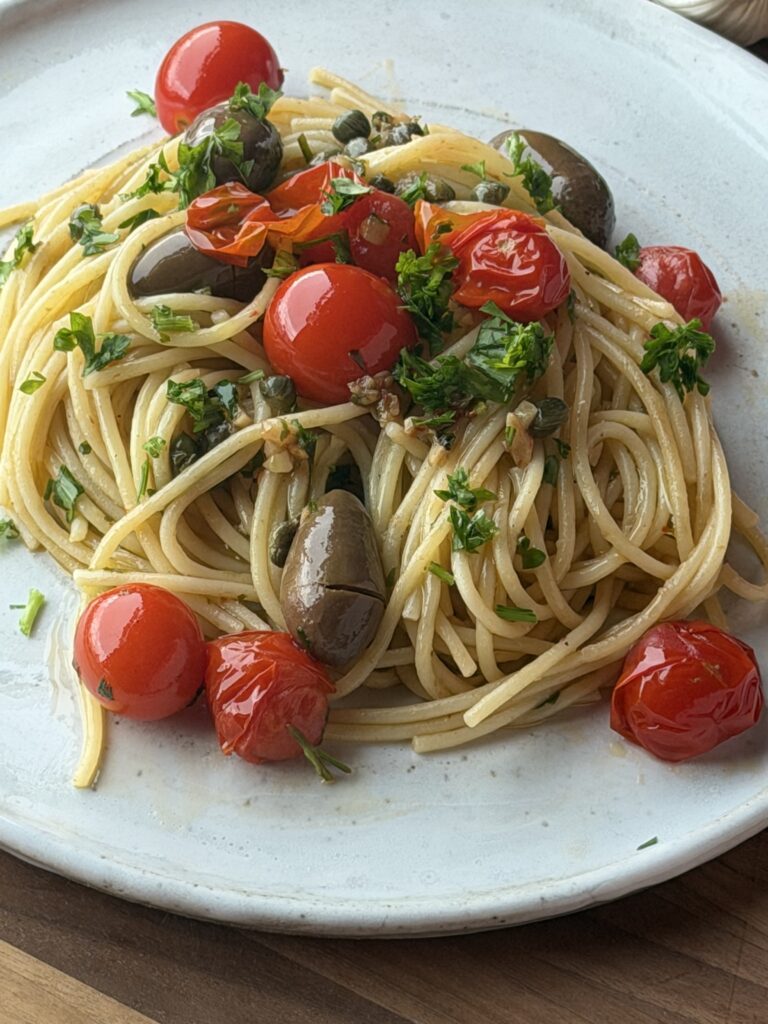
During the summer, I almost always reach for fresh cherry tomatoes. Their natural sweetness creates a lighter, brighter sauce that beautifully balances the briny olives and capers while adding gorgeous pops of red and golden orange throughout the finished pasta. When tomatoes aren’t in season, a good can of crushed or whole peeled tomatoes creates an equally delicious, richer, and more traditional version of the dish.
No matter which route you choose, puttanesca is proof that some of the most satisfying meals come from the simplest pantry staples.
- Extra Virgin Olive Oil – The backbone of the sauce. Rather than relying on butter or cream, puttanesca gets its luxurious texture from a generous pour of good olive oil emulsified with the tomato juices and starchy pasta water. Anchovies – The secret ingredient. They completely melt into the oil, adding rich umami and depth without making the sauce taste fishy.
- Cherry Tomatoes – Fresh, sweet, and vibrant. As they blister, they release their juices to create a naturally light sauce with beautiful bursts of color.
- Garlic – The aromatic foundation. It perfumes the olive oil and fills the kitchen with that unmistakable smell that makes everyone ask, “What’s for dinner?”
- Olives – Kalamata bring a rich, winey depth, while green olives add a brighter, saltier bite. Using both creates more complexity than either alone.
- Capers – Tiny but mighty. Their bright, briny acidity cuts through the richness of the olive oil and ties all the flavors together.
- Parsley – More than just a garnish. It adds freshness and a burst of green that lightens the dish visually and balances its bold flavors.
- Pasta Water – The ingredient people often overlook. The starch helps emulsify the olive oil and tomato juices into a silky sauce that clings beautifully to every strand of spaghetti.
Why You’ll Love This Recipe
- 🍅 Made almost entirely from pantry staples.
- ⏱ Ready in about 30 minutes.
- 💰 Inexpensive but tastes restaurant-worthy.
- 🌿 Packed with bold Mediterranean flavors.
- ☀️ Fresh cherry tomato version is perfect for summer.
- 🍝 Naturally dairy-free.
The Secret to Great Puttanesca
- Melt the anchovies completely into the olive oil.
- Don’t over brown or burn the garlic.
- Let the tomatoes blister instead of stirring constantly.
- Finish cooking the pasta in the sauce.
- Use plenty of olive oil.
- Emulsify with pasta water – it helps everything come together.
- Finish with another drizzle of olive oil.
Variations & Substitutions
- Fresh cherry tomatoes or canned tomatoes.
- Kalamata only vs. mixed olives.
- Bucatini, linguine, or spaghetti.
- Add fresh basil if parsley isn’t available.
- Gluten-free pasta.
- Optional grated lemon zest (not traditional, but lovely in the summer version).
Pasta Puttanesca
Ingredients
Instructions
-
Bring a large pot of salted water to a boil and cook the spaghetti until just shy of al dente.
-
While the pasta cooks, heat the olive oil in a large skillet over medium heat. Add the anchovies and stir until they dissolve into the oil.
-
Add the garlic and red pepper flakes. Cook for about 30 seconds, just until fragrant. Be careful not to let the garlic brown.
-
Add the cherry tomatoes and a pinch of black pepper. Cook for 6–8 minutes, stirring occasionally, until the tomatoes blister and begin collapsing into a rustic sauce.
-
Stir in the olives and capers. Cook for another 1–2 minutes to let their flavors mingle with the tomatoes.
-
Transfer the spaghetti directly from the cooking water into the skillet. Add a splash of pasta water and toss vigorously until the sauce lightly coats the noodles.
-
Add additional pasta water as needed until glossy and silky. Finish with a small drizzle of olive oil and the chopped parsley.
-
Serve immediately.
Note
Use more olive oil than you think.
This isn't a heavy tomato sauce. The sauce is really an emulsion of olive oil, tomato juices, and starchy pasta water.
Don't add Parmesan.
Traditional puttanesca generally skips cheese because the anchovies already provide plenty of savory richness.
Finish in the pan.
The magic happens during the final minute when the pasta, tomato juices, olive oil, and pasta water come together.

